Loading…

Loading…
Loading…
Loading…
Retatrutide (LY3437943)
Retatrutide weight loss results come from clinical trials of an investigational once-weekly injection being developed by Eli Lilly and Company. Retatrutide is a single molecule designed to activate three hormone pathways involved in appetite, metabolism and energy balance: GIP, GLP-1 and glucagon receptors. In Phase 3 TRIUMPH-4, adults with obesity or overweight and knee osteoarthritis (without diabetes) achieved substantial average weight loss at 68 weeks, alongside meaningful improvements in knee pain and physical function when treatment was combined with healthy diet and physical activity. Earlier Phase 2 findings in adults with obesity or overweight (without type 2 diabetes) also showed large, dose-related reductions in body weight over 24 and 48 weeks. The most commonly reported side effects across trials are mainly gastrointestinal, especially during dose escalation. Retatrutide is not available for public use and is being evaluated in multiple Phase 3 studies across obesity-related conditions, including knee osteoarthritis, obstructive sleep apnoea and cardiometabolic outcomes.
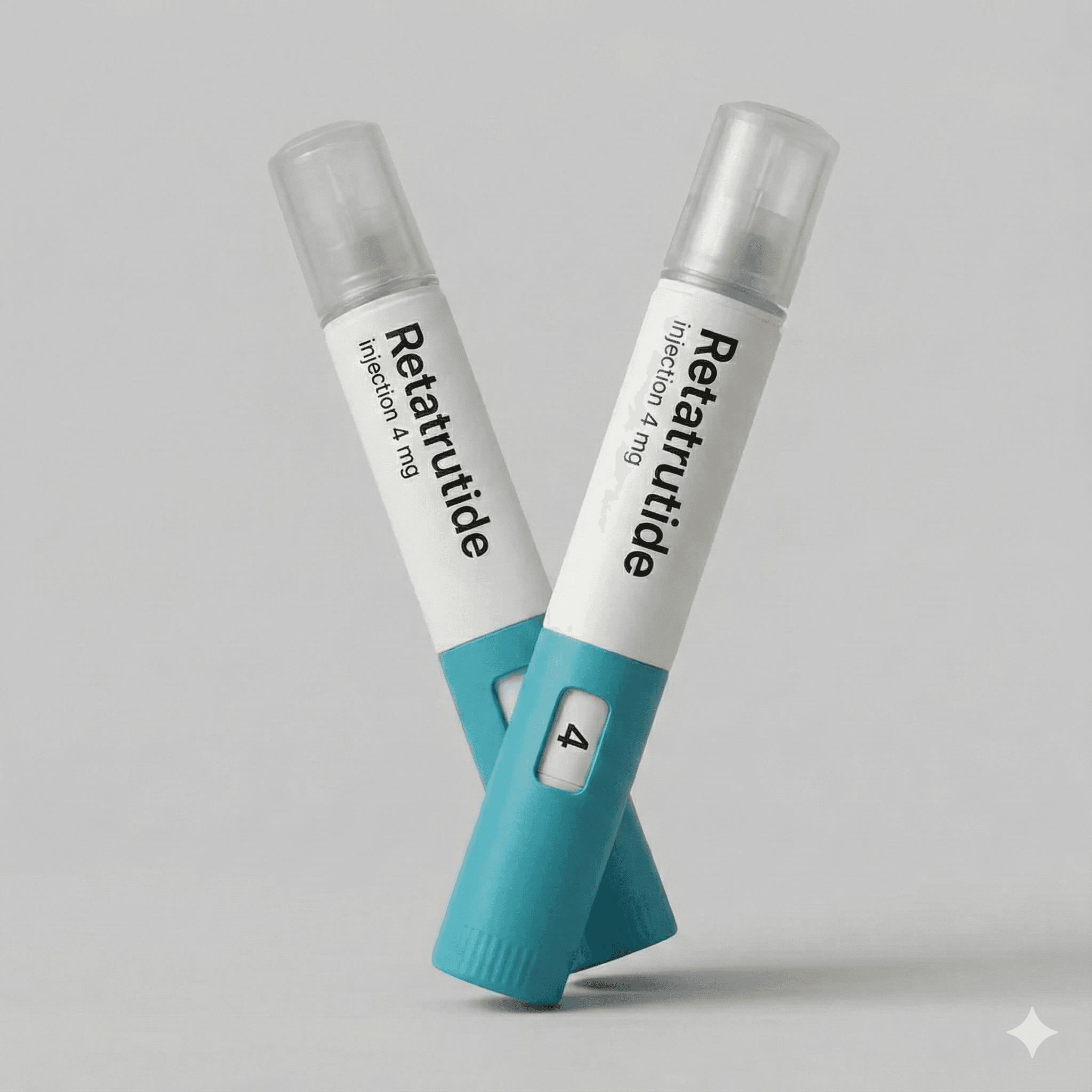
Currently unavailable
Available Dosages
Active Ingredient
Retatrutide (LY3437943)
Brand
Eli Lilly and Company
Drug Class
Triple hormone receptor agonist (GIP, GLP-1 and glucagon receptor agonist)
Administration
Once-weekly subcutaneous injection (investigational use in clinical trials)
Prescription Status
Investigational medicine, not currently authorised for routine prescribing
Dosage Form
Injectable medicine administered by subcutaneous injection in clinical trials
Strengths Available
4 mg, 6 mg, 9 mg, 12 mg
In the Phase 3 TRIUMPH-4 trial, participants taking retatrutide 12 mg lost an average of 28.7% of body weight at 68 weeks (average baseline 112.7 kg), compared with 2.1% with placebo. In Phase 2 trial reporting, the highest dose achieved up to 17.5% mean weight reduction at 24 weeks and up to 24.2% mean weight reduction at 48 weeks in adults with obesity or overweight without diabetes.
Phase 3 TRIUMPH-4 also reported co-primary improvements in knee pain, and secondary improvements in physical function. Detailed peer-reviewed publication for TRIUMPH-4 was noted as planned in the trial communications.
Duration & Size
Phase 3, 68 weeks, randomised, double-blind, placebo-controlled; 445 participants randomised 1:1:1 to retatrutide 9 mg, retatrutide 12 mg, or placebo
Highest Avg Weight Loss
28.7% average body weight reduction at 68 weeks with retatrutide 12 mg
Common Side Effects
Nausea, Diarrhoea, Constipation, Vomiting, Decreased appetite, Dysesthesia
Key Takeaway
Both 9 mg and 12 mg met co-primary endpoints for weight reduction and WOMAC pain reduction at 68 weeks, with significant improvements in physical function also reported.
Duration & Size
48 weeks, randomised, double-blind, placebo-controlled; 338 participants with obesity or overweight with weight-related conditions, excluding type 2 diabetes
Highest Avg Weight Loss
Up to 24.2% mean weight reduction at 48 weeks (highest dose group)
Common Side Effects
Gastrointestinal adverse events during dose escalation, commonly mild-to-moderate
Key Takeaway
Retatrutide met the primary endpoint at 24 weeks and showed substantial dose-related weight reduction through 48 weeks in adults with obesity or overweight without diabetes.
Clinical trial dosing used a step-wise, once-weekly escalation approach to reach a target maintenance dose. Exact prescribing instructions for routine care are not available because retatrutide is investigational.
| Weeks | Dose | Frequency |
|---|---|---|
| 1-4 | 2 mg | Once a week |
| 5-8 | 4 mg | Once a week |
| 9-12 | 6 mg | Once a week |
| 13-16 | 9 mg | Once a week |
| 17+ | 12 mg | Once a week |
Important: In TRIUMPH-4, participants escalated from 2 mg once weekly in step-wise increments every four weeks until reaching the assigned target dose (9 mg via 2, 4, 6 mg; or 12 mg via 2, 4, 6, 9 mg).
The referenced trial materials report outcomes at 24 weeks, 48 weeks and 68 weeks. They do not provide a specific time to first noticeable effect, and early response may vary during the dose escalation period.
Retatrutide is being developed by Eli Lilly and Company. It is described as an investigational medicine currently being studied in Phase 3 clinical trials across obesity and obesity-related conditions.
Retatrutide is not available for public use and is currently accessed through participation in clinical trials where eligible.
Retatrutide is not currently available as an NHS treatment. NICE lists retatrutide for managing overweight and obesity as awaiting development, with an expected publication date to be confirmed.
No NHS rollout or phased access programme is described in the referenced sources because retatrutide remains investigational.
The referenced sources confirm subcutaneous injection in trials but do not provide specific injection site instructions.
The referenced sources confirm subcutaneous injection in trials but do not provide specific injection site instructions.
The referenced sources confirm subcutaneous injection in trials but do not provide specific injection site instructions.
In TRIUMPH-4, the most common adverse events for retatrutide 9 mg and 12 mg were gastrointestinal. Reported rates were nausea 38.1% and 43.2% (placebo 10.7%), diarrhoea 34.7% and 33.1% (placebo 13.4%), constipation 21.8% and 25.0% (placebo 8.7%), vomiting 20.4% and 20.9% (placebo 0.0%), and decreased appetite 19.0% and 18.2% (placebo 9.4%). Dysesthesia occurred in 8.8% and 20.9% (placebo 0.7%) and was described as generally mild and rarely leading to discontinuation. In Phase 2 reporting, gastrointestinal side effects were described as the most commonly reported adverse events, generally mild-to-moderate, and usually occurring during dose escalation.
Serious side effects are extremely rare, but it is important to know the signs so you can get help if you need it.
ⓘSerious adverse events are not detailed in the referenced trial summaries and press materials
The referenced sources provide common adverse event reporting and discontinuation rates but do not provide a comprehensive serious adverse event profile suitable for patient-facing safety guidance.
Injection site reaction details are not provided in the referenced sources.
The referenced sources do not provide typical duration of side effects. Phase 2 reporting notes gastrointestinal events usually occurred during dose escalation.
Long-term safety outcomes are being studied in Phase 3 trials, and the referenced sources indicate additional readouts are anticipated in 2026.
In TRIUMPH-4, discontinuations due to adverse events included discontinuations for perceived excessive weight loss, and discontinuation rates were reported as correlated with baseline BMI.
Storage instructions are not provided in the referenced sources.
Travel guidance is not provided in the referenced sources.
Risk: The referenced sources do not provide specific data on lean mass or muscle mass changes.
Advice: Muscle mass considerations are not addressed in the referenced sources and would require trial-specific or clinician guidance.
| Product | Active Ingredient | Mechanism | Dose | Weight Loss Potential |
|---|---|---|---|---|
| Mounjaro | Tirzepatide | Dual GIP and GLP-1 receptor agonist | Once weekly injection. In SURMOUNT-1, dosing started at 2.5 mg weekly and increased by 2.5 mg every 4 weeks to a target dose (5 mg, 10 mg, or 15 mg once weekly). | SURMOUNT-1 (72 weeks): mean body weight reduction was 20.9% with tirzepatide 15 mg once weekly versus 3.1% with placebo. |
| Wegovy | Semaglutide | GLP-1 receptor agonist | Once weekly injection. Maintenance dose is 2.4 mg once weekly (recommended), with dose escalation every 4 weeks during initiation. | STEP 1 (68 weeks): mean body weight reduction was 14.9% with semaglutide 2.4 mg once weekly versus 2.4% with placebo. |
| Saxenda | Liraglutide | GLP-1 receptor agonist | Once daily injection. Recommended dose is 3 mg daily, starting at 0.6 mg daily for one week and increasing weekly until 3 mg is reached. | 56-week trial (adults without diabetes): mean weight loss was 8.4 kg with liraglutide 3.0 mg versus 2.8 kg with placebo. |
Note: The weight loss figures above come from different clinical trials with different designs and populations. They are not head-to-head comparisons. Choice of treatment should be based on suitability, side-effect profile, contraindications, availability, and clinical guidance from a qualified prescriber.
Common questions about the product. If you have more questions, please contact our support team or book a consultation with one of our clinicians.
This information is for general education based on referenced clinical trial and research sources and does not replace medical advice. Retatrutide is an investigational medicine and is not approved for public use or routine prescribing. Decisions about weight management treatment and osteoarthritis care must be made with a qualified healthcare professional. If you are considering participation in a clinical trial or have concerns about side effects, speak to the trial team or a clinician promptly.
Manufacturer announcement summarising Phase 3 TRIUMPH-4 topline results, including weight loss, WOMAC pain and physical function outcomes, and commonly reported adverse events.
https://investor.lilly.com/news-releases/news-release-details/lillys-triple-agonist-retatrutide-delivered-weight-loss-averageSyndicated release repeating key TRIUMPH-4 topline outcomes, including weight loss and knee osteoarthritis pain metrics, plus safety highlights.
https://www.prnewswire.com/news-releases/lillys-triple-agonist-retatrutide-delivered-weight-loss-of-up-to-an-average-of-71-2-lbs-along-with-substantial-relief-from-osteoarthritis-pain-in-first-successful-phase-3-trial-302638804.htmlManufacturer FAQ-style explainer about retatrutide as an investigational once-weekly injectable medicine being studied for obesity.
https://www.lilly.com/news/stories/what-to-know-about-retatrutideUS government clinical trial registry record describing TRIUMPH-4 design, purpose, eligibility, and study status for retatrutide in obesity or overweight with knee osteoarthritis.
https://clinicaltrials.gov/study/NCT05931367UK research governance summary describing the study purpose, population, and UK participation details for TRIUMPH-4.
https://www.hra.nhs.uk/planning-and-improving-research/application-summaries/research-summaries/triumph-4/US government clinical trial registry record for the Phase 2 retatrutide trial in adults with obesity or overweight, including study purpose and duration.
https://clinicaltrials.gov/study/NCT04881760Peer-reviewed review hosted by the US National Library of Medicine summarising retatrutide's triple agonist mechanism, available clinical data, and safety considerations.
https://pmc.ncbi.nlm.nih.gov/articles/PMC12190491/NICE topic tracking page indicating the status of retatrutide as a medicine topic awaiting development in NICE guidance processes.
https://www.nice.org.uk/guidance/awaiting-development/gid-ta11845UK horizon scanning summary of retatrutide development status, intended indication, and available evidence landscape.
https://io.nihr.ac.uk/techbriefings/retatrutide-for-managing-overweight-or-obesity/The information on this page is based on the sources listed above. Always consult with a qualified healthcare professional for medical advice.